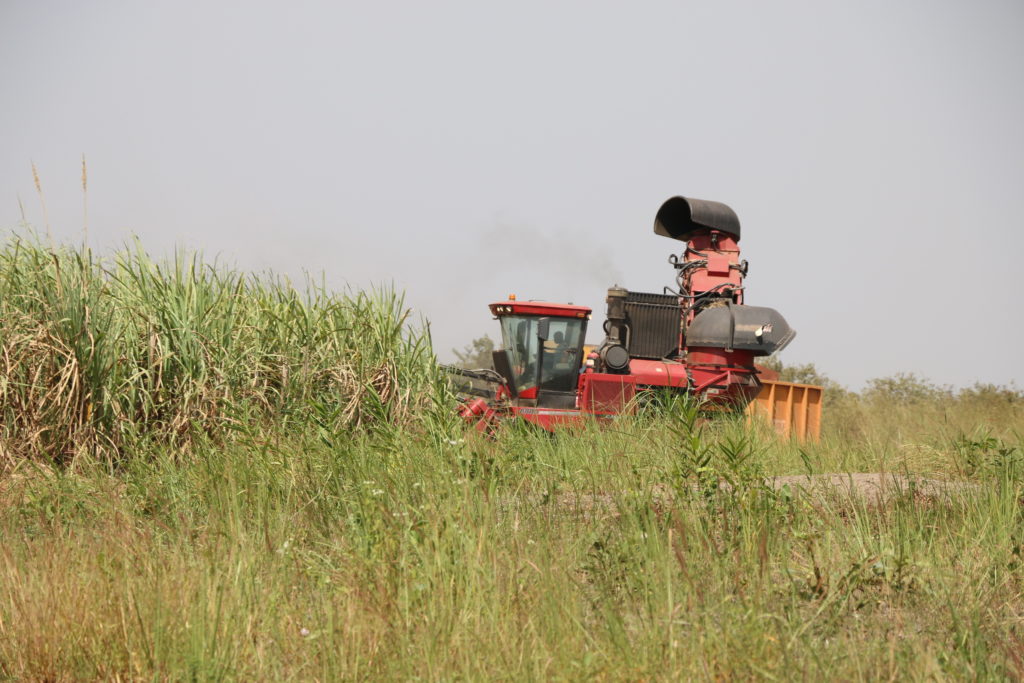
Large-scale agricultural investment (LSAI) involves complex trade-offs with regard to West African farmers’ livelihoods. Our research presents a robust impact evaluation of a biofuel investment in northern Sierra Leone. The LSAI case evaluated has been certified by the Roundtable of Sustainable Biomaterial and is noted for complying with several other international guidelines. A total of 882 households were surveyed in the treatment and control areas, and asked about their livelihood structures. Statistical results show that farmers in the LSAI area have reduced their agricultural area for food production, have lower yields, and need to spend more on external labour. By contrast, the LSAI-impacted villages present a clear increase in total monetary income, a perceived improvement in food and water security, and an increase in food consumption expenditure. However, the improvement in financial income was higher for landowners than for tenants, and access to wage labour was mainly given to men rather than women, suggesting that LSAI can potentially increase local inequalities. It is therefore not possible to speak about a linear impact in this case, but more of a transformation of livelihood structures toward a more wage-dependent system. The findings also support the idea that the enforcement of international guidelines on responsible investment is necessary to mitigate the negative consequences of LSAI on local livelihoods. Further efforts must also be made along these lines to create a security net, to prevent potentially harmful consequences in the case of operations shutting down.
Click here to see options of full text access